


Rola

Japan’s Multicultural Multitalented Model & Actress: Rola
From the Jungles of Bangladesh to the Global Catwalk
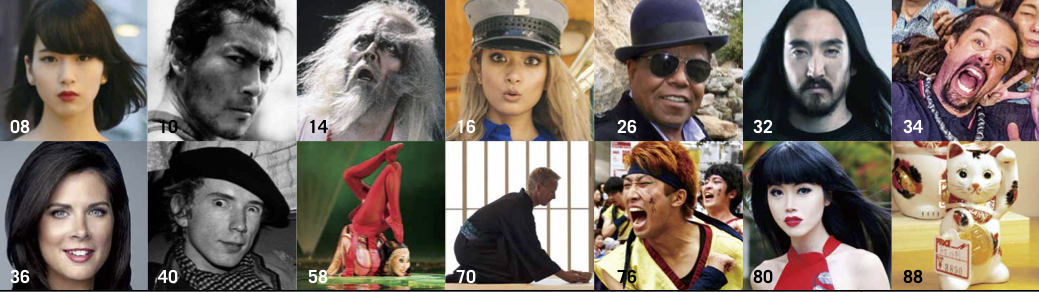
You’d be hard-pressed to visit Japan without encountering Rola. You can see her striking features everywhere — as a fashion model, on TV shows, in commercials and now as an actress and opera singer. In 2014, she had more commercial contracts than any other celebrity in Japan. Today, she has one of the largest social media followings of any Japanese celebrity and is perhaps the hottest celebrity from Japan to hit Hollywood. In 2017 she appeared in her first Hollywood feature film as the female soldier “Cobalt” in Resident Evil: The Final Chapter. Born to multiethnic parents, Rola went from the jungles of Bangladesh to learning to speak, read and write Japanese in Tokyo. She is now trilingual, speaking Bengali, Japanese and English. The Gucci Crew member’s modeling career began when she was scouted as a high school student on the streets of Shibuya, Tokyo. She has published books on fashion, cooking and learning English. Rola now has her eyes set on expanding her horizons — in her work and in her life. Having recently purchased a home in Los Angeles, Rola is focused on improving her English and adding her creativity to new areas of entertainment while working on her non-profit educational foundation. Tokyo Journal’s Executive Editor Anthony Al-Jamie sat down with the multifaceted Rola in L.A. to see what’s next.
Tatsuya Nakadai

Tatsuya Nakadai
Sixty years of Film, Television and Theater
Tatsuya Nakadai is a shining star of post-war Japan. Still active in the entertainment business as an octogenarian, the legendary actor’s work in film and theater has been acknowledged worldwide. The films he has appeared in have won awards at the Oscars and the “Big Three” film festivals in Berlin, Cannes and Venice. Nakadai’s career defies easy categorization because of the wide variety of characters he has portrayed in films and plays. His dynamic performance on screen is unforgettable, especially his work with Japan’s cream-of-the-crop film directors, including Akira Kurosawa, Masaki Kobayashi and Kon Ichikawa. His appearances in Kurosawa films such as Kagemusha and Ran have etched his name into the history of world film and in 2015 he was awarded the Order of Culture by His Majesty the Emperor of Japan. Tokyo Journal Executive Editor Anthony Al-Jamie sat down with Tatsuya Nakadai at his acting school, Mumeijuku, to hear about his career and experiences working with Kurosawa.
Toshiro Mifune

Toshiro Mifune
Mifune: The Last Samurai
Toshiro Mifune (1920-1997) is one of the most prominent and revolutionary actors in the history of Japanese film. With his iconic acting, Mifune opened the door to a new era that brought Japanese cinema to the world stage. He appeared in over 170 feature films, but is best known for the 16 films that he made with legendary filmmaker Akira Kurosawa, including Rashomon, Seven Samurai, The Hidden Fortress and Yojimbo. He starred in Hiroshi Inagaki’s Samurai Trilogy, the groundbreaking NBC television miniseries Shogun and Steven Spielberg’s 1941. He also portrayed Admiral Isoroku Yamamoto, who bombed Pearl Harbor, in three films. He was awarded Best Actor at the Venice Film Festival twice. On November 14th, 2016, he was honored with a posthumous star on the Hollywood Walk of Fame for his work in the motion picture industry. On November 25, 2016, the documentary Mifune: The Last Samurai, directed by Steven Okazaki, was released.
Streetstyle Glamour

Tokyo Journal photographer Lola Rose captures the latest in street fashion in her photo column "Streetstyle Glamour."
Junko Koshino

The First Fashion Show in Cuba
August 1996. I was said to be the first to hold a fashion show in Cuba. Then I held another in 2000. Then another in 2009, at the Hotel Nacional de Cuba, commemorating the 80th anniversary of Cuba-Japan diplomatic relations. A work of an artist was exhibited at the entrance. The two will be reunited in heaven. The hands of the clock turn slowly, proud of salsa, the sun and the revolution.
Tokyo Journal Editorial

Rolling with Rola
This issue’s cover features one of Japan’s top celebrities — the multicultural, multitalented model and actress Rola. Tokyo Journal rolled with Rola through the streets of L.A. and combed the beaches of Santa Monica, Newport and Laguna in California.
Cherry Blossoms in San Diego

A Beautiful Glimpse of Japan in San Diego
Japanese Friendship Garden’s Annual Cherry Blossom Festival at Balboa Park in San Diego, CA
By Tokyo Journal Intern Megan Aceron
As March comes to an end, the cherry blossom trees begin to bloom, welcoming spring with their vibrant pink petals. Attracting San Diegan natives and tourists alike, the Japanese Friendship Garden’s Annual Cherry Blossom Festival promotes a unique cultural experience. The festival embeds glimpses of Japanese culture immersing visitors with traditional performances, foods, arts, crafts and vendors. Visitors also have a chance to bring a cherry blossom sapling with them home for $175. In 2019, tickets were $12 for adults; $10 for students, seniors, and military with IDs; and free for children six and under. Creating endless photo opportunities, Balboa Park’s sen-kei-en (three-scene garden) Japanese Friendship Garden embraces Japan’s prideful cherry blossom season through an unforgettable experience.
Volume 38. Issue #279

Contents |
|
| 1. Tokyo Journal Editorial Inside this issue |
20. Travel to Yosemite Luxury European hotel |
| 2. The First Fashion Show in Cuba (二ヵ国語) Junko Koshino's international fashion |
21. Travel to Central Coast, California Paso Robles hotels, wineries, restaurants & castle |
| 3. Streetstyle Glamour Fashionistas pave the way to fashion |
22. Travel to Seattle Chic, modern, historical & luxury hotels |
| 4. Mifune: The Last Samurai Documentary filmmaker & Mifune interviews |
23. Travel to Anaheim & Chicago Hotels for convention-goers |
| 5. Actor Tatsuya Nakadai 60 years of film, television & theater |
24. Travel to Las Vegas Upscale hotels & spectacular shows |
| 6. Multicultural Model Rola From Bangladesh jungles to the global catwalk |
25. Serviced Apartments in Tokyo Furnished apartments for business travelers |
| 7. Tito Time in Tokyo Jackson brother on 50 years in entertainment |
26. Tokyo Hotels Luxury & modern hotels + ryokan experience |
| 8. DJ Steve Aoki International electronic dance music king |
27. Yosakoi Dance Festival So you think they can dance! |
| 9. Soulrocker Michael Franti Musical mission for health, happiness & equality |
28. Supermodel Jessica Minh Anh in Japan Modeling in Tokyo, Kyoto and Fukushima |
| 10. CNN News Anchor Erin Burnett From investment banking analyst to journalist |
29. Illuminate Education Altruism within the company and beyond |
| 11. Ambassador of Japan Heritage Musician Marty Friedman |
30. Steve Killelea's Groundbreaking Peace Initiative Measuring the economic benefits of peace |
| 12. Sex Pistols Bob Gruen's punk photo flashback |
31. Photo album from Cuba (二ヵ国語) Hiroyuki Suzuki's midsummer night's memory |
| 13. Barges of the Dead Donald Richie struck by seashore haunting apparition |
32. Living "As" Nature, Not "With" It Mind management for satisfaction |
| 14. David Nunan's Global Classroom Teaching to the heart and head |
33. How the Japanese build success into their products Quality in product manufacturing |
| 15. Mari's Homemade Cooking Recipes Miso-simmered mackerel |
34. Garrity's Japan From Tokyo to Soka |
| 16. Koshu Wine Uniquely indigenous to Japan |
35. Haitian Culture Various styles of Haitian art |
| 17. New American Comfort Chef Ben Ford's pork belly lettuce wraps |
36. Product Reviews for the Busy Traveler TJ's shopping recommendations |
| 18. Fig and Ham Tart Expat cucina's tasty tart recipe |
37. Tournament of Roses America's new year celebration |
| 19. Travel to San Francisco & Scottsdale Northern California & Arizona hotels |
38. Yoga Lifestyle A wabi-sabi contemplation |
Japan Tourism Agency Award for TJ

Tokyo Journal Receives Commissioner Award from the Japan Tourism Agency
On October 2, 2017, the Japan Tourism Agency (JTA) held their 9th Annual Commissioner Award. The government agency, which operates under Japan’s Ministry of Land, Infrastructure, Transport and Tourism, is responsible for promoting the rapidly growing tourism industry in Japan and overseas.
Tokyo Journal was one of four recipients to receive the prestigious award. Tokyo Journal, established in 1981 as Japan’s oldest English magazine and sold in bookstores, was acknowledged for their extensive coverage of Japanese travel and culture. The English magazine, distributed internationally, introduces readers to a variety of subjects relating to Japan and Japanese culture including:bra
* Popular tourist destinations
* Japanese entertainment
* Japanese cooking recipes
* Fashion trends
Tokyo Journal’s articles represent Tokyo’s diversity, covering a wide range of topics for a global readership, from Japanese pop culture to Buddhism. Japan is teeming with the latest trends, innovations and discoveries – ideas Tokyo Journal communicates in an entertaining and informative way to encourage travel to Japan.
Buddhism
Buddhism
Interview with Philosopher Dr. Hiroshi Tasaka
TJ: How do you define Buddhism?
TASAKA: Buddhism is a kind of “cosmology” that can accept various value systems - not only religions but philosophies that exist around the world. Zen Buddhism, especially, is a “philosophy of contradiction” that can accept all the contradictions in our life, because contradiction is an essence of life. An important thing in Buddhism is the ability to keep the contradictions in mind, to keep gazing at them and think about the meaning of the contradictions.
TJ: In Europe, many philosophers think Buddhism is not a religion but more of a way to understand life or a style of life because it is not theist. What do you think?
TASAKA: It depends on the definition of religion. If we define a religion as a value system centering around one god, then Buddhism is not a religion. Buddhism sees numerous gods, Buddhahood, everywhere – in mountains, rivers, grass, trees, land and even in the wind. However, we need to understand that religion itself is in the process of transformation and evolution in today’s age. An important question is, “What religious systems will replace the old religious systems in the 21st century?” Even a traditional religious system should transform itself to adapt to the changes in people’s minds in modern society.
TJ: We are very interested in knowing how Buddhism views life and death. Could you explain what life and death means to you?
TASAKA: For Buddhists, there is no difference between life and death in their true meaning because life and death share the same reality in life. If we hope to talk about death, we need to answer the question, “Whose death is it?” Is it the death of the Small Ego or the death of the Great Self? Once we ask this question, we will find that the Great Self cannot die. If we see the Small Ego in our mind, it will die sooner or later. However, if we see the Great Self as the world itself, then there is no life and death. A famous philosopher left an important message to us: “You are the world. The world is you”. tj
The complete article can be found in Issue #274 of the Tokyo Journal. Click here to order from Amazon.


