


EDITORIAL FEATURES & REVIEWS (35)
United Nations University Rector Dr. Tshilidzi Marwala Featured

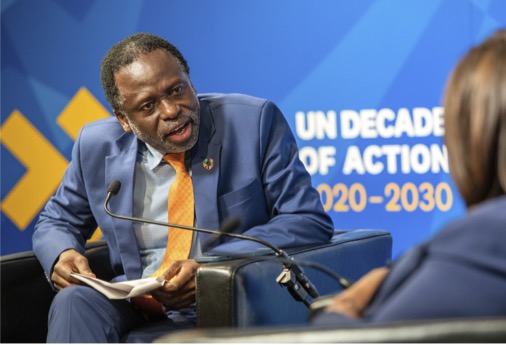
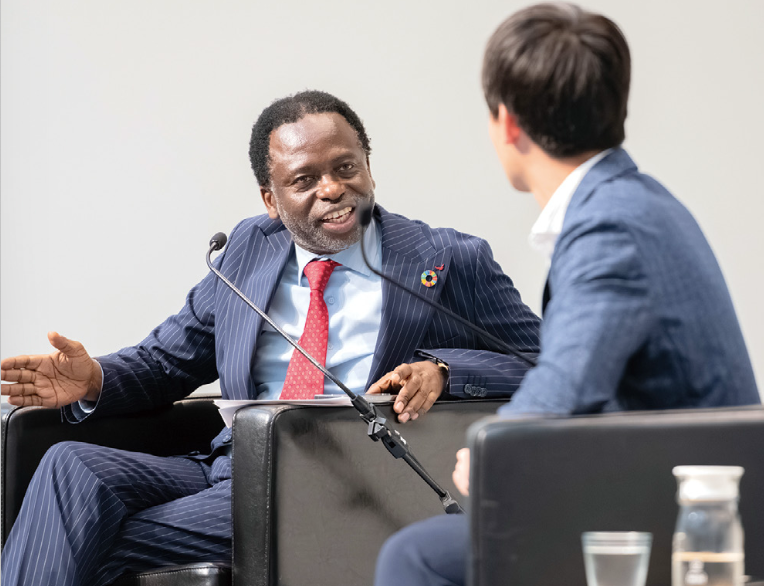
Dr. Tshilidzi Marwala, Rector of the United Nations University and Under-Secretary-General of the United Nations, stands as a towering figure in the realm of global cooperation and innovation. His life story is a testament to the transformative power of education and the boundless potential of the human spirit. Rising from humble beginnings in rural Venda, Limpopo, South Africa, he has ascended to a position of global leadership, driven by an unwavering commitment to solving the world's most critical challenges. Dr. Marwala holds a Bachelor’s and a Master's degree in mechanical engineering from Case Western Reserve University and the University of Pretoria, respectively. He earned his Ph.D. in artificial intelligence and engineering from the prestigious University of Cambridge. Dr. Marwala is a pioneer in harnessing the power of technology for human advancement. His illustrious career has seen him serve as Professor of Electrical Engineering at the University of the Witwatersrand, Johannesburg, and as Vice-Chancellor and Principal of the University of Johannesburg, where he boldly introduced mandatory AI and African Insights curricula for all students – shaping a new generation of globally aware and technologically competent leaders. He currently contributes his expertise as Deputy Chair of South Africa’s Presidential Commission on the Fourth Industrial Revolution and lends his wisdom as a trustee of the Nelson Mandela Foundation. Tokyo Journal Editor-in-Chief Anthony Al-Jamie delved into Dr. Marwala's visionary mission, explored his innovative strategies for confronting global crises, and uncovered the personal narrative that propelled him from a childhood in rural South Africa to becoming a leading voice for unity and progress on the world stage, promoting education as a fundamental human right.
TJ: How do you respond when someone asks, “What is the United Nations University?”
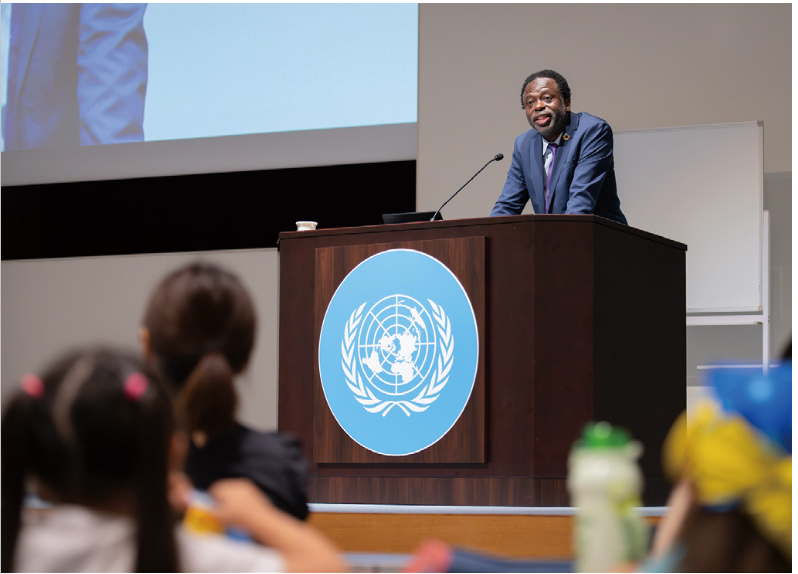
MARWALA: The United Nations University is the first international university with a global mandate, unlike the University of California, which has a California-focused mandate funded by the state. Among its many contributions, the University of California advances the state's interests, but the UNU is tied to a global agenda and must ensure there are no vested interests. When you say, “United Nations,” you know this university represents global priorities. However, this can attract criticism, particularly with the rise of nationalism. In my own country, South Africa, I’ve seen nationalism growing in ways I don’t like. Such trends sometimes lead to the UN and its officials being characterized as “globalists.” People who have issues with multilateralism often blame us. Despite this, the United Nations remains a symbol of hope for a peaceful, collaborative world. It reminds us that some problems—like climate change, ocean pollution, or pandemics—can only be solved collectively. COVID-19 is an example of why global information sharing is essential. I remember South African scientists identifying the Omicron strain during the pandemic. While it was less lethal and helped reduce the virus’s impact, it was unfairly labeled the “South African strain,” leading to travel restrictions. This shows how openness can be hindered when shared information is used to victimize people, underscoring the UNU's role in fostering trust and collaboration globally.
TJ: Can you tell me more about your role as rector and what your responsibilities entail?
MARWALA: The rector’s role is similar to a university president’s. At the University of Johannesburg, I managed 8,000 staff and 52,000 students, while at United Nations University we're smaller and more policy-focused. We have 13 institutes in 12 countries and are opening a third hub in Sweden, as well as a new AI-focused institute in Bologna. The rector leads these institutes to address global challenges. The first challenge is peace and security, particularly for the Middle East, Ukraine and Sudan as of now, but also for preventing future conflicts. The second challenge is climate change—which is real—as I experienced in Bologna at the G7 ministerial meeting. It is also impacting my country with more snowstorms, colder winters and drier conditions. We need to change consumption and production habits, starting with reducing plastic use and promoting recycling. Recently, we organized a session with Ecuador on plastic pollution and its effects on the marine ecosystem. The third challenge is the governance of artificial intelligence to maximize benefits and minimize risks. A key issue is distinguishing between accuracy and truth. AI can be accurate but not necessarily truthful, such as when it misidentifies a person while still being statistically correct.
TJ: What is your goal as rector?
MARWALA: As rector, my goal is to promote the values of the United Nations: multilateralism, human rights as outlined in the Universal Declaration of Human Rights, territorial integrity, peace, security and a just economic order. While the UN alone cannot solve all problems, we must partner, create impactful knowledge and collaborate widely. For instance, I recently hosted leaders from the University of California, Davis, to explore partnerships. Ultimately, impact is achieved through visibility, positive actions and meaningful contributions. TJ: What are the goals behind your travels? MARWALA: Some of my travels are to establish new institutes, and some are to visit existing ones. I believe it’s important for the people I lead to see me. Recently, I opened a UNESCO office, visited our Bruges institute on regional integration and will soon open a hub in Sweden before heading to our headquarters in New York.
TJ: Do you use technology to communicate and visit your many institutions and their people?
MARWALA: Absolutely! We do use technology, but the real question is whether we're using it effectively. There's always room for improvement. We can always travel less and connect more. We can leverage advancements in generative AI to boost our efficiency and productivity, but that requires improving our technological literacy. Many people don’t use basic tools like Microsoft Word efficiently because they haven’t learned all the tricks available. It’s about learning by doing and sometimes consulting manuals. Now, with the introduction of copilots in technology systems, I’m curious about how many people actually use them. Some copilots don’t work well, so it’s important to be attentive when using these tools. Part of our work involves educating people. Our institute in Dresden is leading what we call The Knowledge Academy for the Resource Nexus, which teaches us what we need to know. For example, we recently attended the Pact of the Future in New York, which includes many technological elements. Do we understand those issues? Who can educate us so that we are better informed? We can never be perfectly informed; learning is a continuous process.
TJ: Were you born and educated in South Africa?
MARWALA: I come from the northern part of South Africa, specifically Venda, which is home to an ethnic group with a king. Interestingly, our king’s name is Mr. Mavhungu David Mphephu Ramabulana or Vho-David Japan Ramabulana, commonly known as Japan Mphephu. I always say that we have linkages to Japan. I also worked in Johannesburg, the wealthiest part of the African continent. The first premier of Gauteng was Mr. Tokyo Sexwale, a well-known figure who almost became president of FIFA. South Africa also has cities with unique names like Paris, though you won’t find a Berlin or an LA there, likely because those names are too long.
TJ: Do you get to visit home?
MARWALA: I haven’t been back home since coming to Japan, but I miss it very much. I’ve visited South Africa many times, five times in the last 20 months, but I’ve only been to my farm there once. I was born in that part of the world and never really left for the city until I was 17, when I attended a science conference in London. Interestingly, that was just three weeks before the fall of the Berlin Wall, and I’ve often wondered if the East and West German delegates knew what was coming. But of course, history is never predictable. Unless you are sitting at certain tables, you will not even know where it is going until it happens. That conference was a formative experience and sparked my interest in studying outside of South Africa. So, I pursued an undergraduate degree in mechanical engineering at Case Western Reserve University in the U.S. years ago, followed by a Ph.D. in AI at the University of Cambridge. Afterward, I spent about 19 months in London as an academic before deciding to return to South Africa, where I enjoyed a fulfilling 22-year career. During that time, I even bought a farm, intending to live a sustainable, nature-connected life after serving as the president of the University of Johannesburg. Inspired by Gandhi’s words, “You have to be the change you want to see,” I sought a more decarbon- ized lifestyle away from the city. However, just as those plans were forming, the Secretary-General announced that I would be sent to Japan. And that is how I came here.
TJ: Is your farm close to your hometown Venda?
MARWALA: It’s not close by American distances. The distance between Johannesburg and Venda, the village where I come from, would be about 700 kilometers, and the distance between Johannesburg and my farm is about 250 kilometers. It is next to a town called Modimolle, or Nylstroom, as it used to be known in Afrikaans. They named it Nylstroom because when the Dutch settlers were moving to the north we called them “fault trackers.” They arrived in that town and thought the river they encountered there was part of the Nile’s streams. Without a GPS, it is an understandable mistake, though you can imagine how far off they were—the Nile starts all the way up north in Uganda.
 TJ: Do you know of any other people from Venda who are internationally active?
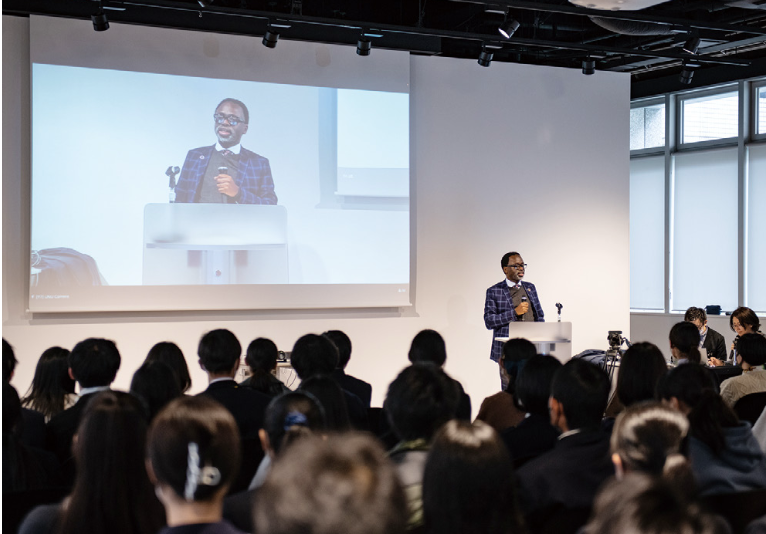
MARWALA: Yes, there are a few people from Venda who are active internationally, each contributing in their own way. Of course, not all roles are as public as mine. I’ve always considered myself a public servant, and now, as an international public servant, my focus is on serving and supporting people. This commitment inspired me to undertake a project here in Japan: visiting all 47 prefectures and speaking in each of them. I’m not finished yet, but I’m making progress, adding a pin to the map each time I visit a new city and give a talk. I expect to complete this project within the next year and a half. For me, it’s about bringing the values of the United Nations of peace, responsible consumption and cultural promotion directly to the people. Japan is one of the few countries with many UNESCO heritage sites, which highlights the importance of culture as the collective consciousness of a nation. I thoroughly enjoy exploring these heritage sites and sharing these values. Education is a fundamental human right. TJ: South Africa has one of the newest constitutions in the world. Does this reflect an advanced aspect of South African culture? MARWALA: More like one of the most complex. South Africa is a land of contrasts—home to one of the oldest languages, Khoisan, and some of the youngest. Khoisan, which Nelson Mandela was familiar with, is said to be the oldest living language, predating fully developed voice boxes. It’s remarkable that you can speak it using clicks alone. It reflects our First Nations, the Khoisan people, who have lived in the region for thousands of years. Then you have younger languages like Afrikaans, which many mistakenly believe is Dutch. It’s not. It started as “kitchen Dutch” in Cape Town, evolving with words borrowed from Khoisan, Indonesian and other African languages. Afrikaans is only about 120 to 130 years old. Similarly, you have languages born from the disruptions of the Mfecane, a period of migration caused by the rise of Shaka Zulu, forming languages in Mozambique, Zimbabwe and elsewhere just 200 years ago. So, South Africa is both old and new, linguistically and culturally. Our democracy is similarly complex, requiring constant reinforcement. Even in mature democracies like the U.S., the journey is ongoing. South Africa’s multilingualism fascinates me. On TV, people converse in Zulu and Sotho, understanding one another perfectly. This interaction is common in urban areas, but less so in Venda, my hometown, as it’s less linguistically mixed.
TJ: What specific agendas are you pursuing through the United Nations University?
MARWALA: At the UNU, we address a variety of issues, including sustainability and peace. For example, our institute in Tokyo focuses on biodiversity as an essential element of sustainability, while our institute in Bonn deals with human security, particularly the intersection of AI and climate change, leading us to COP discussions. Our office in Geneva focuses on peace-building, which goes beyond just preventing wars. While war prevention strategies through treaties, such as the Nuclear Non-Proliferation Treaty, are important, those efforts are primarily preventive in nature. Peace-building, on the other hand, is a far more sophisticated process. It's about creating a culture of harmony in schools and fostering global cooperation, where we see our problems as shared. The theory of democratic peace suggests that the more we democratize, the more peaceful we become. And this is not just between the member states — it is present in our companies, communities and civil organizations, especially when dealing with issues of vested interests. It entails the issue of ensuring that we trade more, not less; countries that trade more tend to coexist more peacefully compared to countries that do not. tj
 国際連合大学学長
チリツィ・マルワラ博士
平和と人権の強力な推進者
国際連合大学学長兼国際連合事務次長であるチリツィ・マルワラ博士は、国際協力とイノベーションの分野において卓越 した存在だ。彼の人生は、教育の持つ変革力と人間の無限の可能性の証左である。南アフリカのリンポポ州ヴェンダの 農村で育った青年は、世界の最重要課題を解決するという揺るぎない信念を胸に、グローバルリーダーとしての地位へと 上り詰めた。ケース・ウェスタン・リザーブ大学で機械工学学士号、プレトリア大学で同修士号、ケンブリッジ大学で人 工知能と工学の博士号を取得。人類の発展のためにテクノロジーを活用するパイオニアとなった。 ヨハネスブルクのウィッ トウォーターズランド大学では電気工学の教授を務め、ヨハネスブルク大学の副学長兼校長時代には、アフリカについて の知識を深める「アフリカン・インサイト」と、AI(人工知能)の履修を全学生に義務付けるなど、グローバルな視野と 技術力を備えた次世代リーダーの育成に尽力した。現在は、南アフリカの第4次産業革命大統領委員会副委員長を務め るほか、ネルソン・マンデラ財団の理事としても活躍している。『東京ジャーナル』編集長アントニー・アルジェイミーが、 マルワラ博士の明確なビジョンに基づく使命を掘り下げ、世界の危機に立ち向かう革新的戦略に切り込む。南アフリカの 地方から、教育が基本的人権であることを世界に訴え、統合と進歩を体現するリーダーへと上り詰めた彼の人生をひもとく。
TJ:「国際連合大学とは?」と聞かれたら、何と答えますか?
マルワラ : 国際連合大学(以下、国連大学)は、世界的な使命を担う 初の国際大学です。例えばカリフォルニア大学は州政府から資金提供 を受け、カリフォルニア州の利益を推進する役割も持ちますが、国連 大学はグローバルな課題に取り組み、限定的な利益を追求することは ありません。「国際連合」の名のとおり世界を優先します。しかし、特 にナショナリズムの台頭を背景に、これが批判を招くこともあります。 私の母国・南アフリカでも、残念ながらナショナリズムが広がってい ます。こうした傾向が強まると、国連やその職員が「グローバリスト」 として非難されることがあります。多国間主義に否定的な人々が、私 たちを批判することも多々あります。それでも国連は、平和で協力的 な世界への希望の象徴であり続けています。気候変動、海洋汚染、パ ンデミックといった問題は、国際社会が協力しなければ解決できませ ん。コロナ禍においては、世界的な情報共有の重要性が証明されました。 南アフリカの科学者たちはパンデミック中にオミクロン株を特定しま した。この変異株は致死率が低く、ウイルスの影響を軽減するのに役 立ちましたが、不当に「南アフリカ株」と呼ばれ、渡航制限が課され る事態を招きました。情報を公開することで逆に不利益を被ってしま う顕著な例に、オープンな情報共有の難しさを改めて突きつけられ、 国際的な信頼と協力の推進における国連大学の役割を痛感しました。
TJ:学長としての役割や責務について教えてください。
マルワラ:普通の大学の学長と基本的には同じです。以前に学長を務 めたヨハネスブルク大学は職員 8000人、学生 5 万 2000人でしたが、 国連大学はもっと規模が小さく、政策対応型です。12カ国に 13 の研 究所があり、さらにスウェーデンに第3のハブ、ボローニャに人口知 能(AI)研究所を設立します。学長は、これらの研究所を統括し、 世界的な課題に取り組みます。第一の課題は平和と安全保障で、特に 中東、ウクライナ、スーダンの戦争に取り組み、将来の紛争防止も目 指しています。第二の課題は気候変動です。これは現実の問題であり、 G7 の閣僚会合でボローニャを訪れた際にもその影響を実感しました。 私の母国でも、降雪の増加、寒冷化、乾燥化が進んでいます。消費・ 生産習慣を変える必要があり、まずはプラスチック使用の削減とリサ イクルの促進から始めるべきです。先立ってプラスチック汚染と海洋 生態系への影響についてのセッションをエクアドルと共催しました。 第三の課題は、AIのガバナンスです。その利益を最大化し、リスク を最小化する必要があります。特に重要なのは、「精度」と「真実」を 区別することです。AIは、精度は高くても必ずしも真実を反映して いるとは限りません。例えば、統計的には正しくても人物を誤認識す ることもあり得ます。
TJ:学長としての目標は?
マルワラ: 多国間主義、世界人権宣言に基づく人権、領土の保全、平和、 安全保障、公正な経済秩序といった国際連合の価値観を推進すること です。国連だけですべての問題を解決することはできません。パート ナーと協力し、影響力のある知見を生み、広範に連携する必要があり ます。例えば最近、カリフォルニア大学デービス校のリーダーらを迎 え、パートナーシップの可能性を議論しました。つまるところ影響力は、 可視性、前向きな行動、意義のある貢献によって実現されるのです。
 TJ:世界中を飛び回っていらっしゃいますね。
マルワラ:新しい研究所の設立のために出かけることもあるし、既存 の研究所を訪問することもあります。私が統括する組織の人々と直接 会うことは重要だと思います。最近では、ユネスコのオフィスを開設し、 ブルージュにある地域統合比較研究所を訪問しました。近々スウェー デンに新たな拠点を開設し、その後ニューヨークの本部へ向かう予定 です。
TJ:多くの研究機関やその職員とのコミュニケーションや訪問にテク ノロジーを活用していますか?
マルワラ:もちろんテクノロジーを活用していますが、問題はそれを 効果的に使えているかどうかです。改善の余地は常にあり、移動を減 らしつつ絆を深めることも可能です。最新の生成AIを活用して効率 と生産性を向上させることもできますが、そのためにはテクノロジー リテラシーを向上させる必要があります。Word のような基本的なツー ルを効果的に使えない人が多いのは、利用可能な機能を学んでいない からです。重要なのは、時にマニュアルを参照しつつ実際に使ってみ ることです。最近は、テクノロジーシステムにコパイロット(補助AI) が導入されていますが、実際にどれだけの人がそれを活用しているの か疑問です。効果的に機能しないものもあるため、慎重に利用するこ とが重要です。私たちは教育にも関わっています。ドレスデンの研究 所では、「リソースネクサスのための知識アカデミー」と呼ばれるプロ グラムを主導し、必要な知識を提供しています。最近、ニューヨーク で開催された「未来のための協定」は、テクノロジーに関わる要素が 豊富でした。私たちはそれらの問題を十分に理解しているでしょうか? 誰が私たちに適切な教育を提供し、より良い情報を得る手助けをして くれるのでしょうか? あらゆる情報を得ることは不可能なので、学 び続けることが大切なのです。 TJ:南アフリカで生まれ、教育を受けたのですか? マルワラ:出身は南アフリカの北部に位置するヴェンダで、王が支配 する民族の土地です。王の名はマヴフング・デイヴィッド・ムペブ・ ラマブラナあるいはウォ = デイヴィッド・ジャパン・ラマブラナ通称 ジャパン・ラマブラナ。私は常々、私たちは日本とつながりがあると言っ ています。私は、アフリカ大陸で最も裕福な地域であるヨハネスブル クでも働いていました。ハウテン州の初代首相トーキョー・セクワレは、 FIFA の会長候補になったほどの有名人です。南アフリカの都市にパリ などの名はあっても、ベルリンやロサンゼルスのような名がないのは、 長すぎるからでしょうね。
TJ:故郷に帰ることはありますか?
マルワラ:日本に来てからは故郷に戻る機会がなく、とても残念です。 南アフリカにはこの 20カ月で5回訪れましたが、自分の農場に行った のは1度だけです。私はそこで生まれ、17 歳まで都会に出たことはあ りませんでした。17 歳で初めて科学会議に参加するためロンドンに行 きました。ベルリンの壁崩壊のわずか 3 週間前のことでした。あの会 議に参加していた東西ドイツの代表者たちは、歴史的変化が近づいて いることを知っていたのだろうか、としばしば考えます。もちろん、 歴史は決して予測できるものではありません。特別な立場にいなけれ ば、実際に起きるまで分からないものです。私はその会議で大きな衝 撃を受け、国外留学への興味をかき立てられました。アメリカのケー ス・ウェスタン・リザーブ大学で機械工学の学士号を取得し、ケンブ リッジ大学でAIの博士号を取得しました。その後ロンドンで約 19カ 月間研究活動に従事した後、南アフリカに戻ることを決意し、22 年間 充実した生活を送りました。そのあいだに農場を購入し、ヨハネスブ ルク大学の学長を務め上げた後は、自然の中でサステナブルな生活を 送りたいと考えていました。マハトマ・ガンジーの「世の中に変化を 求めるなら、あなた自身がその変化を体現しなさい」という言葉に感 銘を受け、都会を離れて脱炭素型のライフスタイルを実現しようと思っ たのです。その計画を進めていた時に国連事務総長から日本への赴任 を告げられました。そうした経緯で私は日本に来たわけです。
TJ:農場は故郷のヴェンダから近いのですか?
マルワラ:アメリカ的な感覚で言うと近くはありません。ヨハネスブ ルクからヴェンダまでは約 700キロメートルで、ヨハネスブルクから 私の農場までは約 250キロメートルです。農場があるモディモールの 旧名はアフリカーンス語でニルストルーム(ナイルの小川)。かつてオ ランダ人入植者たちが北に進みこの町に到達した時、そこに流れる川 がナイル川の一部だと誤解したのです。GPS がない時代ですから無理 もないですが、ナイル川がウガンダの北部から始まることを考えると、 大きな間違いだったことが分かります。
TJ:ヴェンダ出身で国際的に活動している方は他にもいらっしゃいま すか?
マルワラ:世界を舞台に貢献している人は何人かいますが、すべての 人が私のように公の場に出ているわけではありません。私は常に自分 を公僕だと考えてきました。今は国際的な公僕として、世の人の役に 立ち支援することが使命だと思っています。この思いが、ここ日本で 新たなプロジェクトを始めるきっかけとなりました。47都道府県すべ てを訪れ、講演を行うのです。現在進行形で、新しい都市を訪れて講 演をするたびに、地図にピンを指しています。あと1年半ほどで終了 する予定です。国連が目指す平和、責任ある消費行動、文化の促進を 直接人々に語りかけるのが目的です。日本はユネスコの世界遺産が多 い数少ない国の一つであり、それは文化の重要性の認識を国全体で共 有していることの証しです。私はそうした遺産を訪ね、その素晴らし さを楽しんでいます。
 TJ:南アフリカ憲法は世界で最も新しい憲法の1つですが、これは南 アフリカ文化の先進的な側面を反映しているのでしょうか?
マルワラ:むしろ、複雑さの象徴でしょう。南アフリカの特徴は対比 です。最も古い言語の 1 つであるコイサン語と、最も新しい言語のい くつかが共存します。ネルソン・マンデラが親しんでいたコイサン語は、 声帯が完全に発達する以前からある、今も使われている最も古い言語 だと言われています。クリック音だけで話せるのは驚くべきことです。 何千年もこの地域に住んでいたコイサン人の最初の共同体が起源です。 アフリカーンス語のような新しい言語もあります。オランダ語と間違 われることが多いのですが、アフリカーンス語はケープタウンで「キッ チンオランダ語」として始まり、コイサン語、インドネシア語、その 他のアフリカの言語から借用した言葉とともに進化しました。アフリ カーンス語は約120 〜130 年前に誕生したばかりです。また、シャカ・ ズールーの台頭によって起きた民族大移動の混乱から、モザンビーク、 ジンバブエ、その他の地域で 200年ほど前にもいくつかの言語が生ま れました。つまり、南アフリカは言語的にも文化的にも古くて新しい のです。私たちの民主主義も同様に複雑で、強化し続ける必要があり ます。アメリカのような成熟した民主主義社会でも、その道のりは平 たんではありません。南アフリカの多言語性は見事で、テレビではズー ルー語やソト語が飛び交いますが、お互い完全に理解しています。こ うしたやり取りは都市部では一般的ですが、私の故郷ヴェンダではあ まり見られません。ヴェンダは言語的にはそれほど複雑ではありませ んから。 教育は基本的人権
TJ:国連大学で取り組んでいる具体的な課題は?
マルワラ:国連大学では、持続可能性や平和などさまざまな問題に取 り組んでいます。例えば、東京にあるサステイナビリティ高等研究所 は持続可能性の重要な要素として生物多様性に焦点を当てています。 ボンにある環境・人間の安全保障研究所では、人間の安全保障、特 にAIと気候変動の関係に注目し、国連気候変動枠組条約締約国会議 (COP) の議論に参加しています。政策研究センターのジュネーブ事務 所は平和構築に焦点を当てており、戦争の予防以上のことを目指して います。核兵器不拡散条約のような条約を通じた戦争防止も重要です が、それらの取り組みは主に予防的な性質を持っています。平和構築 ははるかに洗練された理念で、学校で平和の文化を育み、問題共有を 当然ととらえる国際協力を促進するのです。民主的平和論の主旨は、「民 主主義国家同士では戦争が起こりにくい」。これは、国家だけでなく、 企業にも共同体にも市民団体にも当てはまります。通商や取引は減ら すより、増やすべきなのです。通商が活発な国家間の関係は、少ない 場合より平和的な傾向があるのです。tj
We Are X Documentary is a Must See Featured

We Are X Documentary is a Must See
Visual Kei Pioneers Go from the Center Stage to the Silver Screen
By Tokyo Journal Intern Michael Tang
We Are X is a documentary about the lives of the Japanese rock band X Japan and its leader Yoshiki. Even those who have never listened to X Japan before will leave the theater incredibly emotional and moved.
2016 OC Japan Fair Featured

2016 OC Japan Fair
A Japanese Cultural Experience in Southern California
By Tokyo Journal Intern Michael Tang
 On September 9th and 10th, 2016, the OC Japan Fair returned for another amazing festival showcasing Japanese culture in Orange County, California. This year’s event was located at the Phoenix Club of Anaheim. The OC Japan Fair featured an exhibit hall where vendors sold various Japanese related goods, from anime merchandise to traditional Japanese kimonos. There was an area for children to play kingyo-sukui, the fun and sometime stressful game of catching goldfish with a paper scooper.
Perfume’s World Tour Hits L.A. Featured

Perfume kicked off their latest world tour, Cosmic Explorer, at The Wiltern in Hollywood. Perfume is one of Japan’s most popular and recognized girl groups and the energy that surrounds the group while on stage can only be matched by the level of bass that was blasting through the speakers. In the 16 years since their formation, Perfume has not lost any steam, as they dominate both Japanese and foreign electro-pop music scenes. Tokyo Journal intern Michael Tang had a chance to experience their Hollywood performance during their Cosmic Explorer World Tour.
Miyavi: The Samurai Guitarist Featured

Making Music and Movie Magic
MIYAVI is making waves on both sides of the ocean in the music and movie industries. Born in 1981as Takamasa Ishihara in Osaka, Japan to a Korean father and a Japanese mother, the singer, songwriter, guitarist, record producer and actor took on the stage name MIYAVI. Known for his unconventional style of slapping the guitar rather than playing it with a pick, his international fan base has nicknamed him the Samurai Guitarist. Tokyo Journal’s Executive Editor Anthony Al-Jamie talked to MIYAVI about his multifaceted career.
Akira Kurosawa’s Legacy Featured

Akira Kurosawa’s Legacy Impacts a New Generation of Filmmakers
Hisao Kurosawa Shares his Father’s Legacy with Young Filmmakers Throughout the World
AKIRA Kurosawa, one of the most influential directors in the history of film, will once again shape a new generation of filmmakers through a medium that Kurosawa himself might only have imagined: an online MFA program in digital filmmaking. Like celebrated moviemakers before them, aspiring filmmakers will learn their craft by studying with experts in the field. In addition, they will view hours of never-seen-before footage of Kurosawa himself on the set, allowing students to go behind the scenes and learn visual articulation directly from the master.
X Japan Rocks New York (Japanese)

2014年10月11日、X Japan は多くの日本人バンドにとっての長年の夢を達成した。レッド・ツェッペリンやザ・ローリング・ストーンズ、ザ・フー、
X Japan Rocks New York

X Japan Rocks New York's Madison Square Garden
Japan’s Greatest Rock Band Takes a Bite out of the Big Apple
Interview by Anthony Al-Jamie
On October 11, 2014, X Japan did what most Japanese bands and performers have only dreamt of doing for decades. They played the most revered concert venue in the United States–Madison Square Garden–on the stage that has been graced by the likes of Led Zeppelin, the Rolling Stones, The Who, John Lennon, Paul McCartney, Elton John and Michael Jackson. X Japan is one of the most successful Japanese rock bands in history with more than 30 million albums, songs and videos sold. They sold out the 55,000-seat Tokyo Dome 18 times, and in fall of 2014, just prior to their historic Madison Square Garden concert, the band returned to their old stomping grounds for a two-night stint at Yokohama Arena. X Japan pioneered an entire musical genre known as visual kei, fusing glam rock, punk rock and heavy metal with wild hair, androgynous makeup and flamboyant costumes. Formed in 1982, X Japan was one of the first Japanese bands to achieve mainstream success while on an independent label. In their three-decade career, they have released five studio albums, six live albums, eleven compilation albums and numerous videos. They’ve had their share of drama with the tragic deaths of their beloved guitarist HIDE and bassist TAIJI. At HIDE’s funeral in 1997, more than 50,000 fans came out to mourn his passing. At the same time, lead singer Toshi was struggling with the beginning of a horrific 12-year experience of being abused and taken advantage of by his wife and her co-conspirator as described in his alltelling autobiographical book Brainwashed. After X Japan’s breakup in 1997 and reunion in 2007, fans around the world have been eagerly awaiting a new album and another world tour. What’s in store for X Japan? The following is a series of interviews carried out by Tokyo Journal Executive Editor Anthony Al-Jamie with X Japan, including a pre-Madison Square Garden New York interview with the entire band and pre- and post-MSG interviews with the individual band members. These interviews with bandleader Yoshiki (drums and piano), Toshi (vocals), PATA (guitar), HEATH (bass), and SUGIZO (guitar and violin) took place while the band members were in Los Angeles, New York and Tokyo.
Dr. Sanjay Gupta

Dr. Sanjay Gupta: A Real Life Superhero
From Mild-Mannered Reporter to Lifesaving Neurosurgeon
Dr. Sanjay Gupta, who can be seen on the ground reporting from sites of natural disasters and wars around the world, discretely changes from suit to scrubs on Monday mornings to perform neurosurgery on patients’ brains, spinal cords and other parts of the nervous system. Dr. Gupta is CNN’s multiple Emmy award-winning chief medical correspondent. In addition to hosting CNN’s Vital Signs, he has reported on topics ranging from health care reform to brain injury, medicine, HIV/AIDS, fitness and dis- aster recovery. Dr. Gupta advised First Lady Hillary Clinton as a White House Fellow and authored three New York Times best-selling books. He is currently the associate chief of neurosurgery at Atlanta, Georgia’s Grady Memorial Hospital and a member of the staff and faculty at the Emory University School of Medicine. He is so committed to the profession of neurosurgery that to continue his work as a practicing neurosurgeon he withdrew his name from consideration for the position of Surgeon General of the United States. If all of this isn’t enough to qualify him for superhero status, then add being named as one of the sexiest men alive by People magazine and one of the most influential celebrities by Forbes. Tokyo Journal Executive Editor Anthony Al-Jamie spoke with Dr. Sanjay Gupta on December 3, 2014 for an update on the Ebola outbreak and insight into medicine, health and the multifaceted doctor’s extraordinary career.
Dancing On Air - III

Dancing on Air - III
Adam Young's Inspirational Story of Dancing - Cystic Fibrosis & Drug Addiction Brings TEDx Audience to their Feet
The following is Part III of a series of interviews with Adam Young, a 33-year-old award- winning ballet, tap, jazz, and contemporary dancer from Riverside, California, who has cystic fibrosis and received a double lung transplant at UCLA in May 2013. His professional career was put on hold in 2006 when cystic fibrosis caused his lung capacity to fall below 40%. Adam’s determination to overcome an addiction to pharmaceutical drugs through a 12-step program in 2010 allowed him to receive his lung transplant in 2013, which has in turn given Adam the chance to return to the stage and continue pursuing his passion for dance. On October 16, 2014 Adam shared his inspirational story at TEDx Riverside, receiving a standing ovation. Tokyo Journal talked to Adam about the experience.
More...


